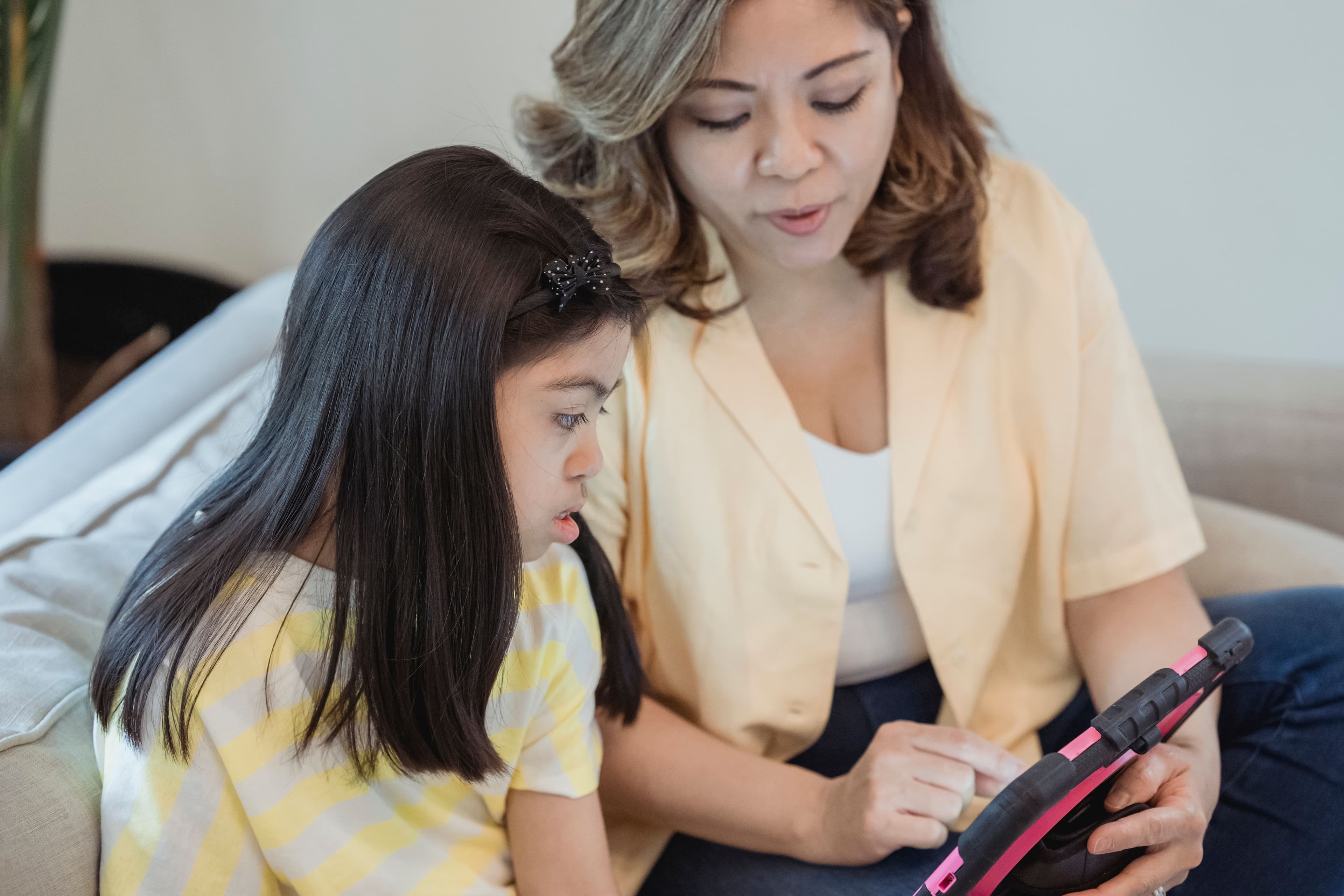
A parent staring down one hard subject this year has two common places to turn. One is a weekly homeschool co-op, where families meet in person and share teaching duties or hire an instructor together. The other is a paid online class, where a child logs in on the family's own schedule. Both deliver instruction the parent does not have to give alone, but they diverge on almost everything else: who sets the pace, how much in-person time the child gets, and how the money is structured.
The single biggest difference is social and structural, not financial. A co-op is a commitment to a group of people at a fixed time each week. An online class is a commitment to a course that waits until the child logs in. Everything else about cost, flexibility, and accountability flows from that one split.
Who each option fits
A weekly co-op fits a family that can protect one regular block of time and wants the child learning alongside other kids in a room. It also fits a parent who wants accountability from other adults, because a co-op class has a group expecting attendance. It works poorly for a family with an unpredictable schedule, a hard commute, or a child who does badly in group settings.
A paid online class fits a family that needs the subject covered without adding a weekly drive or a fixed slot. It suits children who work well alone and parents who travel, work shifts, or live far from any co-op. It works poorly as a substitute for social time, because the child sits at a screen rather than beside peers.
How the costs are structured
Neither option prices the way a full curriculum does, and per-subject prices vary by provider. What can be compared honestly is the shape of the cost. Co-op classes are often priced per class or per term and may carry extra pieces: a facility fee, a supply fee, or an expectation that the parent volunteers time. Online classes are typically priced per course or per subscription, with the materials either included or sold separately.
For a sense of where subscription pricing for online learning tools lands, IXL, an adaptive practice platform listed in the Skip School directory, charges $9.95 per month for a single subject and $19.95 per month for its family plan covering all subjects. That is one tool, not the whole online class market, but it shows how monthly subscription pricing works when a course is not tied to a term or a room. A live online class with an instructor is a different product and prices differently, so parents should ask each provider for the total per subject.
The parent's own time is part of the cost for a co-op. Many co-ops ask parents to teach a class, assist in one, or handle setup, and that labor keeps cash prices down. An online class usually costs money alone and asks for no parent labor beyond supervising login. A family with more time than budget may find the co-op cheaper in cash and more expensive in hours. A family with more budget than time often finds the reverse.
- Co-op cost shape Per class or per term, often with supply or facility fees, sometimes reduced by parent volunteering.
- Online class cost shape Per course or per subscription, materials included or sold separately, no parent labor expected.
- What to check Ask each provider for the total per subject: tuition, fees, materials, and any volunteer requirement.
How the time is shaped
The time difference is more about shape than amount. A co-op takes one fixed block per week, plus travel, plus whatever homework the class assigns between meetings. An online class spreads its work wherever the family puts it, which is the whole appeal and the whole risk. A class that can happen any time can also be deferred every week until it piles up.
Parents who choose the online route need a fallback habit to replace the co-op's built-in deadline. A set block on the family calendar, with the parent checking progress on the same day each week, is the usual fix. Without it, the flexibility of an online class becomes an unfinished course by spring.
What each one is weak at
- Co-op weaknesses Fixed schedule, travel time, possible parent labor requirement, and quality tied to whoever teaches that term.
- Online class weaknesses No built-in deadline, no in-person peers, and parent must supply the structure the course assumes.
Neither weakness is a reason to rule the option out. A family near a strong co-op with a good teacher for the hard subject gets structure and social time at once. A family with a self-driven child and a packed week gets more done with an online course. The honest answer is that each is the better fit for some households.
How to run the comparison for your own family
- Write down the subject and the goal Name what outside help must achieve this year, such as a full lab science or one semester of writing.
- Get the co-op's real total Ask for tuition, supply and facility fees, and any parent volunteer requirement for that class.
- Get the online course's real total Ask for the course price, materials, and what happens if the child falls behind.
- Compare the weekly slots Check whether the co-op's meeting time and drive fit the family calendar every week, not just the first week.
- Weigh the social piece Decide whether the child needs in-person time with peers as part of this subject or gets it elsewhere.
- Pick a structure check If the choice is online, set a weekly progress check on the calendar before paying.
Parents comparing real options can also look at the directory of curriculum companies and learning tools on Skip School, which lists plain facts taken from each company's own site, alongside its how-to guides, tool comparisons, and funding explainers.
Questions to ask before paying
Is a co-op always cheaper than an online class?
Not always. Co-ops often price per class or per term with supply or facility fees, and many ask for parent volunteering. Online courses are priced per course or subscription, and one tool in the Skip School directory, IXL, charges $9.95 per month for a single subject or $19.95 per month for its family plan. The total for one subject depends on the specific provider, so ask each for the full figure.
Can an online class replace the social side of a co-op?
No. An online course is instruction, not in-person community. If social time matters for this subject, the co-op has that built in, while an online family needs to cover it elsewhere.
Which option suits an unpredictable schedule?
The online class. A co-op meets at a fixed time each week, while an online course fits wherever the family places it. The trade-off is that the family must supply the deadline.
What should a parent check before joining a co-op class?
The total cost including fees, the parent labor requirement, the teacher for that term, and whether the weekly meeting time and commute fit the calendar all year.
Where can a parent compare real curriculum and learning tools?
Skip School publishes a directory of curriculum companies and learning tools, with plain facts from each company's own site, plus tool comparisons and funding explainers at skipschool.ai.