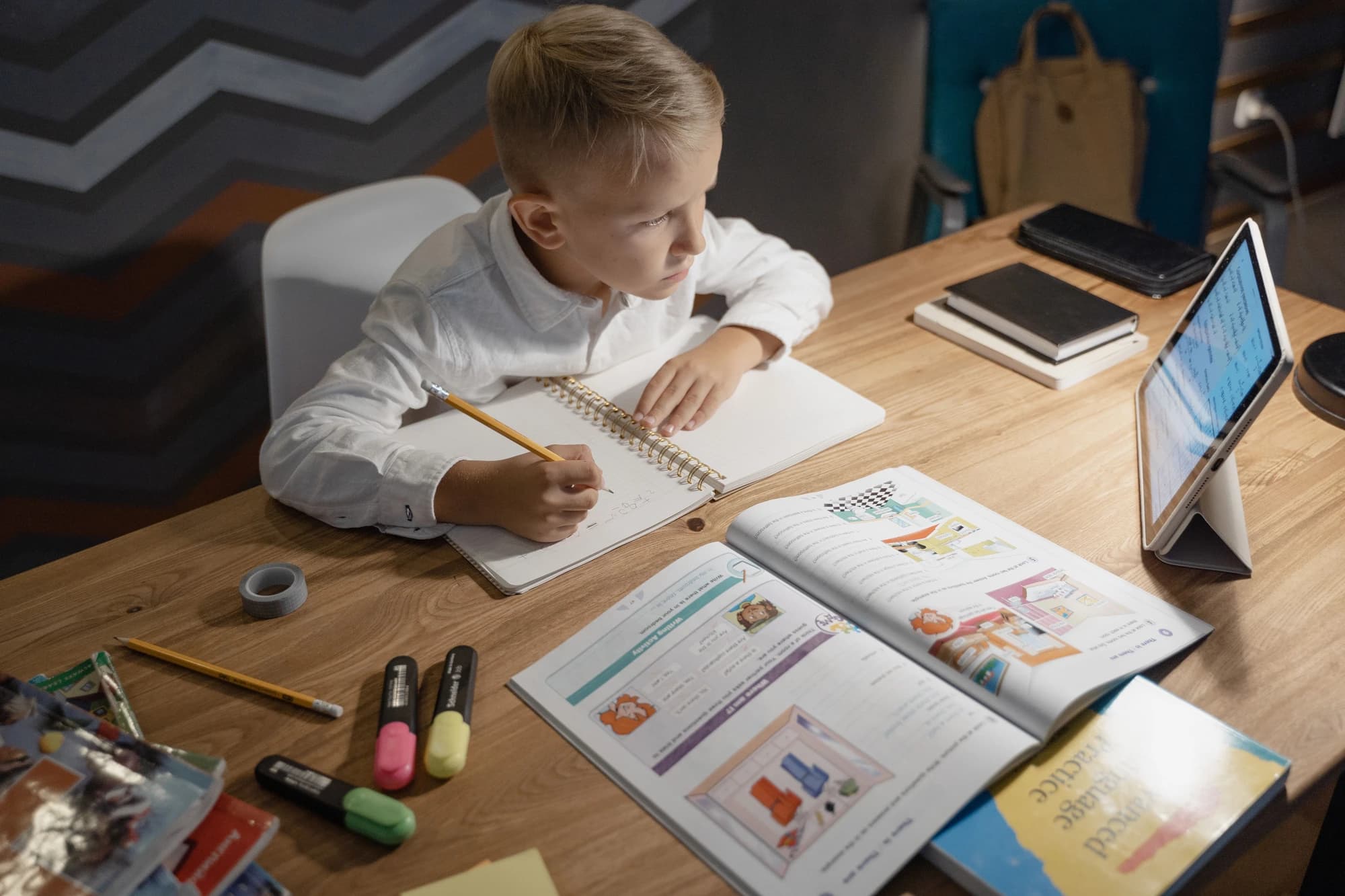
By the end of this guide you will have a working motivation system for your middle schooler: a daily checklist, a weekly goal they set themselves, and an accountability swap with another family. Before you start, you need only two things: some way to write lists, paper or digital, and about an hour to set it up together with your child.
Why the structure works
Parents of 11 to 14 year olds who leave traditional school often ask why the child will not work independently. The answer is usually not laziness. A middle schooler has spent years in a system where every task, deadline, and consequence came from an adult in the room. Independent motivation does not appear because you removed the adult. It appears when the structure the teacher used to carry gets handed to the child in a form they can hold.
Three structures do most of the work. A daily checklist makes the day's expectations visible and finite. A weekly goal the child sets gives them ownership of the outcome. An accountability swap with another family supplies an outside audience, which for this age group often matters more than a parent's approval.
One caution before week one. If your child left school very recently, they may need a decompression period first. Skip School's guide for families new to homeschool calls this deschooling and suggests roughly one month of it for every year spent in traditional school, during which the child reads what they want, plays, and gets bored. A fifth grader coming out of a classroom might need about a month. Starting a motivation system on day two of that period rarely sticks, so if you just pulled your child out, let some time pass before building the checklist.
Set up the system in week one
- Draft the checklist together Sit with your child and list every task you expect in a normal school day, then let them cut anything they think is unreasonable, so the final list is one they agreed to.
- Put the checklist where the child works Print it or keep it on a tablet at their workspace, and make sure they mark items done themselves, since the physical act of checking is what builds the habit.
- Set the first weekly goal Ask your child to name one thing they want finished by the end of the week, and write it down somewhere both of you will see it.
- Agree on a check-in time Pick one short weekly meeting, fifteen minutes is enough, where you review the checklist week and the goal together, and let the child run the meeting.
- Find one swap family Ask one other homeschool family whether they want to trade accountability, so each child presents their weekly goal and progress to the other family, by call or in person.
- Run the swap check-in Put the two children's check-ins back to back in the same call or visit, so each one watches the other report before taking their own turn.
- Review and adjust at the weekly meeting Once a week, ask what should come off the checklist and what the child wants to add, so the list keeps belonging to them rather than accumulating items you slipped in.
Hand over pacing over time
Once the checklist runs smoothly, the next step is transferring planning itself. The goal is a sequence: first your child follows a plan someone else made, then they build a plan with help, and eventually they plan alone. AI tools fit the middle stage well, because the child can ask for a project broken into steps and get a checklist they can track themselves without you in the loop.
Skip School's guide on building executive function with AI gives a prompt template for exactly this handover, where the AI does most of the planning at first and the child takes over gradually. The first-week AI guide also shows how to generate a full week of lessons in minutes, which shortens the list you have to build by hand. A parent can use an AI planning tool this way to hand over pacing without buying anything named here.
If you want help setting that up, skipschool publishes how-to guides, tool comparisons, funding explainers, and a directory of curriculum companies and learning tools at skipschool.ai.
When the child stalls
The most common stall is a checklist that quietly grew. If the list started with six items and now has twelve, the child stops trusting it. Fix it by cutting back to the core items and adding new ones only at the weekly meeting, with the child's agreement.
The second stall is goals set by the parent. If you picked the goal, the child sees the weekly meeting as another performance for you. Fix it by asking a smaller question, what does the child want to be able to show the swap family, and letting that answer become the goal.
The third stall is the swap going quiet. If the other family's check-ins drift, your child notices before you do. Fix it by moving the swap to a fixed day and time and treating it like any other standing appointment.
A fourth stall is you standing over them anyway. If you hover during checklist time, the structure cannot do its job, because the child learns the real deadline is your attention, not the list. Fix it by leaving the room after the morning start and saving all feedback for the weekly meeting.
Questions
How much work counts as enough each day?
The checklist defines it. If the items are done and marked, the school day is over, even if it took ninety minutes. Extending the day because it felt short teaches the child that finishing early buys more work.
What if my child refuses the checklist?
Rebuild it together and let them cut items. A checklist a child did not help write will be treated as your list, not theirs, and refusal is the predictable result.
Do I need an AI tool for this?
No. The checklist, weekly goal, and swap work with paper. AI helps most at the later stage of handing over planning, and you can add it once the basics run.
How long before this works?
Plan on running the weekly meeting and swap consistently for several weeks before your child treats the system as theirs. Early weeks are training for both of you.
Should I start this the week we leave school?
Probably not. Skip School's new-to-homeschool guide recommends a deschooling period first, roughly one month per year of traditional school, so the child can decompress before taking on structured independence.
The weekly email, starting soon
Want the next guide in your inbox?
A free weekly email for parents who use AI for learning at home. Join the list and you will get the first issue when we start.